

Introduction:
Businesses in Angola are entering a new era of growth, yet many still struggle with outdated systems, manual workflows, and inefficient business operations. These challenges often lead to slower productivity, poor customer experiences, and missed revenue opportunities. According to McKinsey, companies that successfully adopt digital transformation can improve operational efficiency by up to 40%, while IDC predicts that global spending on digital transformation technologies will surpass $3.9 trillion by 2027. This highlights how businesses worldwide are investing heavily in technology to remain competitive. For organizations in Angola, digital transformation presents an opportunity to modernize operations, automate repetitive tasks, and make smarter decisions through data-driven tools like ERP, CRM, and mobile applications. In this guide, we’ll explore how embracing digital transformation can help businesses in Angola streamline processes, improve customer satisfaction, and unlock long-term growth opportunities.
What is Digital Transformation and Why It Matters
Digital transformation means using technology to improve how a business operates, serves customers, and grows in a competitive market. It goes beyond simply adopting new software; it involves changing traditional business processes into faster, smarter, and more efficient digital systems. Many companies across the world now invest in digital tools to stay ahead, reduce costs, and improve customer experience. According to McKinsey, businesses that implement digital transformation effectively can improve productivity by up to 40%. In today’s fast-moving market, companies that fail to adapt often struggle with inefficiency, poor decision-making, and limited scalability. For businesses in Angola, digital transformation creates opportunities to automate operations, streamline communication, and make data-driven decisions. Whether through ERP systems, CRM platforms, or mobile applications, digital transformation helps businesses stay competitive, agile, and prepared for future growth.
Simple Meaning of Digital Transformation
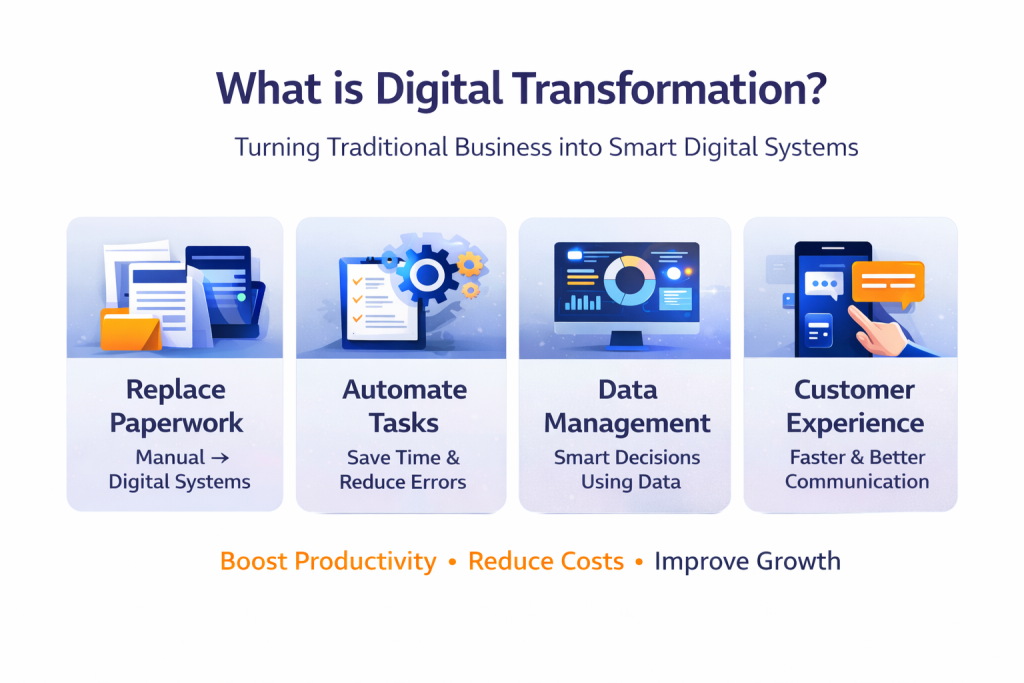
Digital transformation simply means using digital technology to improve everyday business activities and deliver better results. Instead of relying on manual work or outdated systems, businesses use smart tools to automate and simplify operations.
In simple terms, digital transformation includes:
- Replacing paperwork with digital systems
- Automating repetitive tasks
- Managing data through software platforms
- Improving communication with customers online
According to Statista, worldwide digital transformation spending is expected to exceed $3.9 trillion by 2027, proving how businesses are prioritizing technology adoption. Digital transformation helps companies work faster, reduce mistakes, and improve efficiency. It allows teams to focus more on strategy and growth instead of manual tasks.
Key Technologies Involved (ERP, CRM, Apps)
Several technologies play a major role in digital transformation by helping businesses automate operations and improve efficiency.
Common digital transformation technologies include:
- ERP (Enterprise Resource Planning): Manages finance, HR, inventory, and operations in one system
- CRM (Customer Relationship Management): Helps track leads, manage customers, and improve sales
- Mobile Apps: Allow businesses to engage customers anytime and anywhere
- Web Applications: Streamline workflows and support online business processes
According to Grand View Research, the global ERP software market is expected to grow at 11.7% annually through 2030. These tools help businesses centralize information, reduce operational delays, and make smarter decisions. Companies that invest in the right technologies often improve efficiency and customer satisfaction faster than competitors.
How It Impacts Business Growth
Digital transformation directly supports business growth by improving efficiency, customer satisfaction, and decision-making. Businesses that adopt digital tools often respond faster to market demands and operate more effectively.
Keyways digital transformation drives growth:
- Improves productivity by automating tasks
- Reduces operational costs and manual errors
- Enhances customer experience through faster service
- Provides real-time data for better decisions
For example, a company using CRM software can track leads more effectively and increase conversions. A retail business using ERP can manage inventory in real time and avoid stock shortages. According to Deloitte, digitally mature businesses are 23% more profitable than competitors that lag behind in technology adoption. By using digital tools strategically, businesses can scale operations, improve profitability, and stay ahead in the market.
Current Business Challenges in Angola
Businesses in Angola continue to grow across multiple industries, but many still face operational challenges that limit productivity and long-term scalability. Many organizations rely on outdated systems, manual workflows, and traditional management methods, making it difficult to compete in today’s digital economy. According to the World Bank, businesses in developing economies lose significant productivity due to inefficient processes and weak digital infrastructure. Without modern systems, companies often struggle with delayed operations, poor customer engagement, and limited access to business insights. These challenges affect profitability, employee efficiency, and overall business performance.
Common Challenges Faced by Businesses
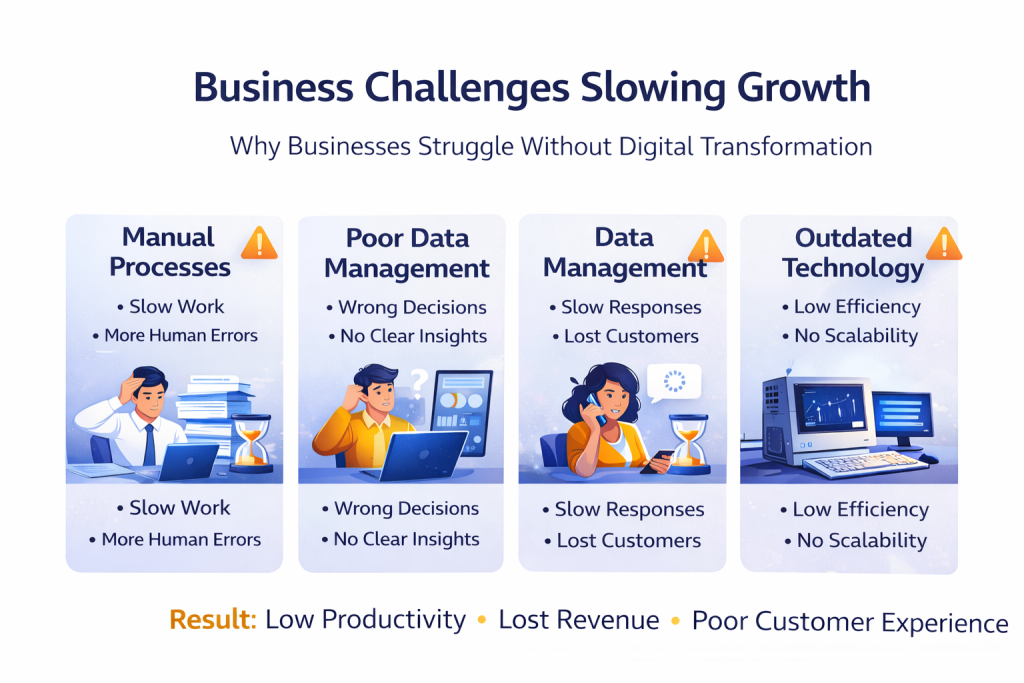
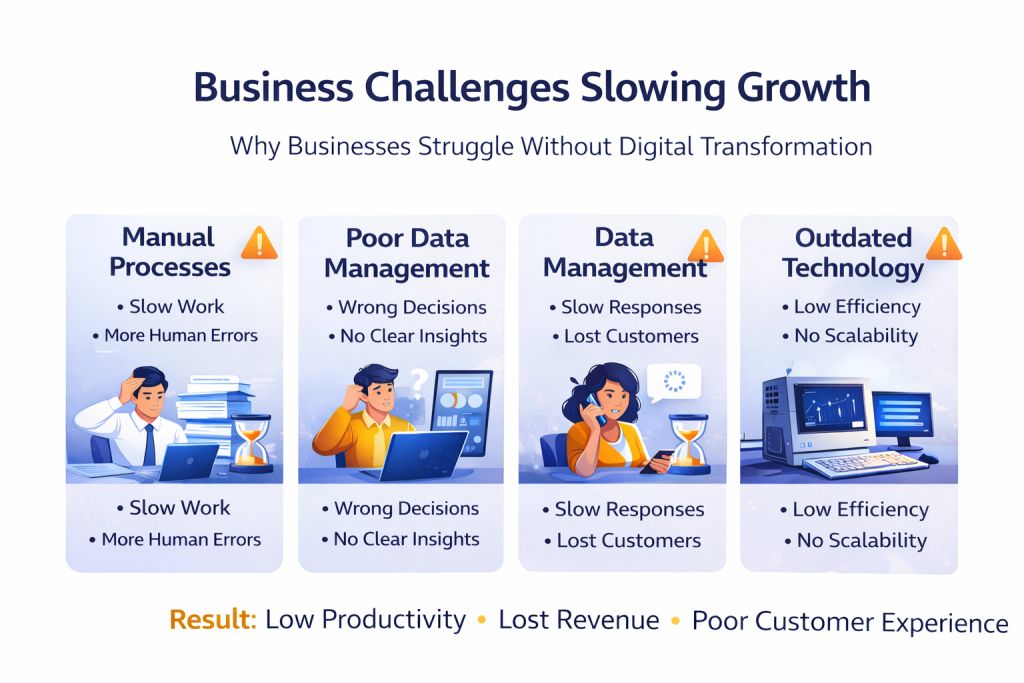
| Challenge | Impact on Business |
| Manual Processes | Slower operations and more human errors |
| Poor Data Management | Weak decision-making and inaccurate reporting |
| Customer Service Delays | Reduced satisfaction and loyalty |
| Outdated Technology | Lower efficiency and scalability |
To stay competitive, businesses must overcome these issues by adopting smarter and more efficient digital solutions.
Manual Processes and Inefficiencies
Many businesses still depend on manual methods such as spreadsheets, paperwork, and traditional communication systems. These outdated processes slow operations and create unnecessary delays.
Common Issues Caused by Manual Processes:
- Increased human errors in data entry
- Time-consuming approval and reporting workflows
- Difficulty tracking records and documents
- Reduced team productivity
According to McKinsey, employees spend nearly 20% of their workweek searching for internal information or tracking manual records. For example, a business managing inventory manually may experience stock mismatches or delayed order fulfillment. By replacing manual systems with digital tools, companies can improve speed, reduce errors, and increase efficiency.
Lack of Data-Driven Decisions
Many organizations struggle because they make decisions based on assumptions rather than real-time data. Without proper reporting systems, leaders often lack visibility into business performance.
Problems Caused by Poor Data Management:
- Inaccurate forecasting and planning
- Slow response to market changes
- Difficulty measuring performance metrics
- Missed growth opportunities
A PwC report found that highly data-driven organizations are three times more likely to achieve better decision-making than competitors. For example, without CRM analytics, sales teams may fail to identify which leads generate the highest conversions. Businesses that use dashboards and reporting tools gain clearer insights and make smarter strategic decisions.
Customer Experience Gaps
Customer expectations continue to rise, but many businesses struggle to deliver fast, personalized, and seamless service. Poor customer experiences can damage trust and reduce repeat business.
Common Customer Experience Challenges:
- Slow response times to inquiries
- Inconsistent communication across channels
- Delayed service delivery
- Lack of personalized support
According to Salesforce, 88% of customers say the experience a company provides matters as much as its products or services. For example, if a customer contacts support and waits days for a reply, they may choose a competitor instead. Businesses that implement CRM tools, chat systems, and automated support can improve response times and create better customer relationships.
Key Digital Solutions for Modern Businesses
Modern businesses need smart digital solutions to stay competitive, improve efficiency, and meet growing customer expectations. Technology helps companies streamline operations, reduce manual work, and make faster decisions based on real-time data. According to Deloitte, businesses that invest in digital tools are 23% more profitable than those that do not prioritize digital transformation. From managing operations to improving customer service, digital solutions now play a major role in every successful organization. Businesses in Angola can improve productivity and long-term growth by adopting systems like ERP, CRM, and mobile applications. These technologies simplify complex tasks, improve collaboration, and help organizations respond quickly to changing market demands. Whether it’s automating workflows or enhancing customer engagement, digital tools provide the flexibility and efficiency businesses need to scale in today’s fast-moving environment.
👉 Looking to streamline operations, automate workflows, and improve customer experience? Digital Data Tecnologia provides customized digital solutions including ERP systems, CRM platforms, mobile apps, and business automation tools to help companies in Angola grow smarter and faster. Contact our team today to discover the right technology solution for your business.
ERP Systems for Automation
ERP (Enterprise Resource Planning) systems help businesses automate and manage core operations from one centralized platform. Instead of using separate tools for finance, HR, inventory, and reporting, ERP combines everything into a single system.
Key Benefits of ERP Systems:
- Automates repetitive business tasks
- Reduces manual data entry errors
- Improves workflow efficiency
- Centralizes business information
According to Grand View Research, the ERP market is expected to grow at 11.7% CAGR through 2030 due to increasing business demand for automation. For example, a retail company can use ERP to track stock levels, process invoices, and manage employee records in real time. ERP systems save time, reduce costs, and improve operational visibility.
CRM for Customer Management
CRM (Customer Relationship Management) software helps businesses manage leads, customer interactions, and sales processes more effectively. It organizes customer data and improves communication across sales and support teams.
Key Benefits of CRM Software:
- Tracks leads and sales opportunities
- Improves follow-up and communication
- Stores customer history in one place
- Increases customer retention rates
According to Salesforce, businesses using CRM systems can increase sales by up to 29%. For example, a sales team can use CRM to monitor customer inquiries, schedule follow-ups, and close deals faster. CRM helps businesses build stronger relationships, improve service quality, and drive consistent revenue growth.
Mobile & Web Applications
Mobile and web applications help businesses connect with customers, simplify operations, and improve accessibility. These applications provide users with instant access to services and information from anywhere.
Key Benefits of Mobile & Web Applications:
- Enhances customer convenience and accessibility
- Supports online sales and service bookings
- Improves user engagement and interaction
- Streamlines internal business processes
According to Statista, mobile apps are expected to generate over $613 billion in revenue globally by 2027. For example, a restaurant can use a mobile ordering app to let customers place orders directly, while a logistics company can use a web app to track deliveries in real time. These applications improve efficiency, boost customer satisfaction, and support business growth.
How to Successfully Implement Digital Transformation
Implementing digital transformation requires more than simply purchasing new software; it demands a clear strategy, proper planning, and the right execution process. Many businesses fail because they adopt technology without understanding their actual needs or goals. According to McKinsey, nearly 70% of digital transformation projects fail due to poor planning, weak strategy, and resistance to change. To succeed, businesses in Angola must align digital initiatives with business objectives, train employees effectively, and choose scalable technologies that support future growth. A structured implementation process helps reduce risks, improve adoption, and maximize return on investment. Companies that follow a strategic roadmap often achieve better efficiency, stronger customer engagement, and long-term operational improvements.
Key Steps for Successful Implementation
| Implementation Stage | Purpose |
| Assess Business Needs | Identify current gaps and challenges |
| Set Clear Goals | Define measurable digital objectives |
| Select Technology | Choose tools aligned with business needs |
| Train Employees | Ensure smooth adoption and usage |
| Monitor Results | Track performance and optimize regularly |
A well-planned approach helps businesses transform efficiently while avoiding unnecessary disruptions.
Step-by-Step Strategy
Businesses should follow a structured roadmap when implementing digital transformation to ensure smooth execution and long-term success.
Effective Step-by-Step Strategy:
- Assess current business challenges and identify gaps
- Set clear digital transformation goals
- Prioritize areas needing immediate improvement
- Choose technology solutions based on business needs
- Train employees before implementation
- Monitor performance and improve continuously
According to PwC, companies with a clear digital strategy are 2.5 times more likely to achieve successful transformation outcomes. For example, a retail business may begin by digitizing inventory management before expanding into CRM and ERP solutions. Taking gradual steps reduces complexity and improves overall adoption.
Common Mistakes to Avoid
Many businesses struggle with digital transformation because they rush the process or overlook key planning areas. Avoiding common mistakes can improve implementation success.
Common Mistakes Businesses Make:
- Adopting technology without a strategy
- Ignoring employee training and onboarding
- Choosing tools that don’t fit business needs
- Focusing only on cost instead of long-term value
- Failing to track performance after implementation
According to Harvard Business Review, employee resistance remains one of the top reasons transformation projects fail. For example, implementing ERP software without training staff often leads to poor adoption and workflow disruption. Businesses should focus on preparation, communication, and long-term planning to avoid setbacks.
Choosing the Right Technology Partner
Selecting the right technology partner plays a major role in digital transformation success. A trusted partner helps businesses choose the right tools, implement them effectively, and provide long-term support.
What to Look for in a Technology Partner:
- Proven industry experience and portfolio
- Expertise in multiple digital solutions
- Strong technical support and maintenance
- Ability to customize solutions for your business
- Transparent pricing and communication
For example, a business implementing ERP should choose a provider with experience in ERP deployment, integration, and support services. According to Accenture, companies with experienced digital partners complete projects 30% faster than those without proper guidance. The right partner ensures smooth implementation, minimizes risks, and supports future growth.
Conclusion :
Digital transformation is no longer just an option, it has become a necessity for businesses that want to stay competitive, efficient, and future-ready. As businesses in Angola continue to grow, adopting technologies like ERP systems, CRM platforms, and mobile applications can help streamline operations, improve customer experiences, and drive smarter decision-making. Companies that invest in digital solutions today position themselves for stronger growth, higher productivity, and long-term success in an increasingly technology-driven market.
Whether you want to automate business processes, improve customer management, or build custom digital solutions, partnering with the right technology provider makes all the difference. Digital Data Tecnologia offers innovative digital transformation services tailored to help businesses modernize operations and achieve sustainable growth. Take the next step toward digital success by connecting with our expert team today.
FAQs
1. What is digital transformation in business?
Digital transformation is the process of using digital technology to improve business operations, customer experiences, and overall efficiency.
2. Why is digital transformation important for businesses in Angola?
Digital transformation helps businesses in Angola improve productivity, reduce costs, and stay competitive in a fast-changing digital economy.
3. What are the main benefits of digital transformation?
The main benefits include improved efficiency, reduced manual errors, better customer service, faster decision-making, and increased profitability.
4. What technologies are used in digital transformation?
Common technologies include ERP systems, CRM software, cloud computing, mobile applications, web applications, and automation tools.
5. How does ERP help in digital transformation?
ERP systems automate core business functions like finance, HR, inventory, and reporting, helping businesses improve efficiency and reduce operational costs.
6. What is the role of CRM in business growth?
CRM software helps businesses manage customer relationships, track leads, improve communication, and increase sales conversions.
7. How can mobile applications support business growth?
Mobile apps improve customer engagement, provide easier access to services, and help businesses connect with customers anytime, anywhere.
8. What challenges do businesses face during digital transformation?
Common challenges include poor planning, employee resistance, lack of training, budget limitations, and choosing the wrong technology.
9. How long does digital transformation take?
The timeline depends on the business size and project complexity, but most digital transformation initiatives take several months to fully implement.
10. How can Digital Data Tecnologia help with digital transformation?
Digital Data Tecnologia provides ERP, CRM, software development, mobile app development, and business automation solutions to help companies modernize and grow.