Introduction:
Businesses in Angola are growing rapidly, but many still struggle with disconnected systems, manual reporting, and inefficient workflows that slow down operations. As companies expand, managing finance, inventory, HR, and sales through separate tools becomes more complicated and costly. This is where ERP systems make a difference. ERP software helps businesses centralize operations, automate repetitive tasks, and improve decision-making through real-time data. According to Panorama Consulting, 91.7% of companies that implemented ERP reported positive business benefits from their ERP projects. Additionally, ERP systems can improve productivity, provide smarter decision-making through real-time visibility, and support long-term growth. In this blog, we’ll explore why ERP systems have become essential for modern businesses in Angola and how they help companies scale efficiently, reduce operational challenges, and achieve sustainable business growth.
What Is an ERP System?
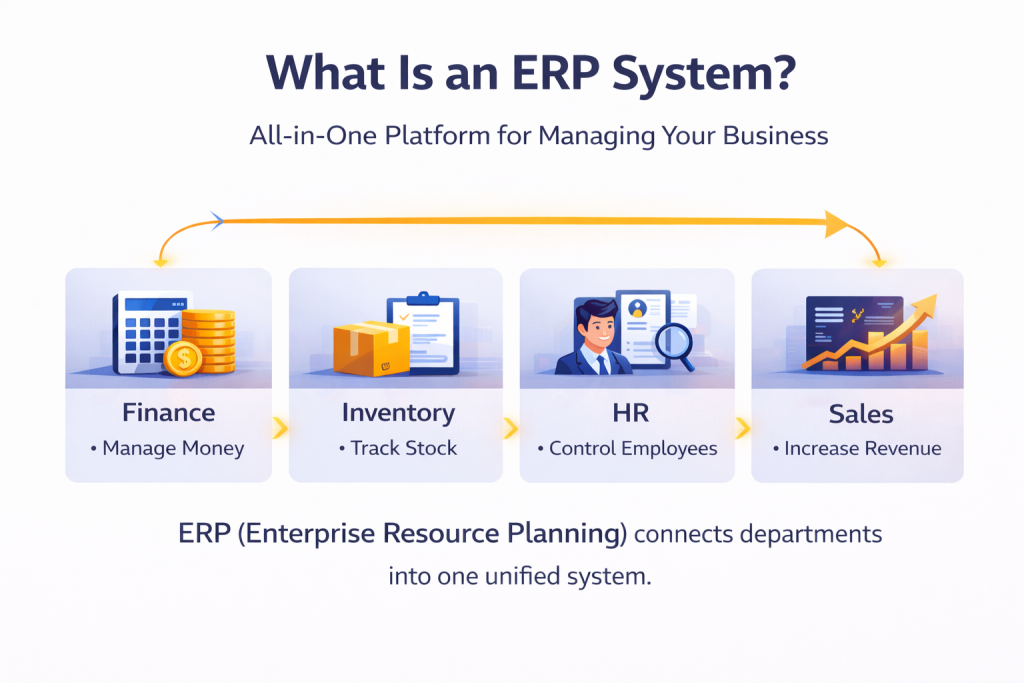
An ERP (Enterprise Resource Planning) system is a business management software that helps companies manage and automate core operations from one centralized platform. Instead of using separate tools for finance, inventory, HR, sales, and reporting, ERP combines everything into a single integrated system. This allows businesses to improve efficiency, reduce errors, and make faster decisions using real-time data. According to Panorama Consulting, over 95% of businesses report improvements in operational processes after implementing ERP software. As businesses in Angola continue to grow, ERP systems have become essential for managing complex workflows and supporting scalable operations. Whether a company wants to improve stock tracking, automate accounting, or monitor performance, ERP provides better control and visibility across the organization. It helps businesses work smarter, reduce delays, and operate with greater accuracy.
Simple Definition of ERP
ERP stands for Enterprise Resource Planning, a software solution that helps businesses manage multiple departments through one unified platform. It connects daily business functions and stores all important data in one place.
ERP Helps Businesses Manage:
- Finance and accounting
- Inventory and stock tracking
- Human resources
- Sales and customer orders
- Reporting and analytics
According to Gartner, ERP remains one of the most adopted software solutions for businesses looking to improve efficiency and automate operations. Instead of switching between multiple tools, employees can access everything through one system. This improves communication, reduces confusion, and helps teams work more efficiently across departments.
How ERP Software Works
ERP software works by collecting, storing, and managing data from different departments in one centralized database. It connects every major business function into a single digital platform.
How ERP Software Operates:
- Stores business data in one system
- Updates information in real time
- Connects departments for better collaboration
- Automates repetitive workflows and tasks
For example, when a sales team creates an order, the ERP system can automatically update inventory, notify finance, and generate reports instantly. According to Oracle, businesses using ERP software gain better operational visibility and faster reporting capabilities. ERP improves workflow efficiency by ensuring every department works with accurate and updated information.
Core Features of an ERP Platform
ERP platforms include multiple tools that help businesses manage and automate daily operations more effectively.
Core Features of ERP Systems:
- Financial Management: Tracks expenses, invoices, and accounting records
- Inventory Management: Monitors stock levels and product movement
- Human Resource Management: Handles payroll, attendance, and employee records
- Reporting & Analytics: Generates business performance reports
- Order Management: Tracks customer orders and deliveries
For example, a retail business can use ERP inventory tools to avoid stock shortages and monitor product demand in real time. According to NetSuite, ERP systems improve decision-making by giving businesses instant access to performance data. These features help organizations improve efficiency, reduce manual work, and support future growth.
Why Choose Digital Data Tecnologia for ERP Solutions in Angola
Choosing the right ERP provider plays a major role in the success of your digital transformation journey. Businesses need more than just software they need a trusted technology partner who understands their challenges and delivers solutions that match their goals. Digital Data Tecnologia provides tailored ERP solutions that help businesses in Angola streamline operations, improve productivity, and scale efficiently. With businesses reporting up to 95% process improvement after ERP implementation according to Panorama Consulting, having expert guidance during setup and deployment is essential. Our team focuses on understanding your business model, identifying operational gaps, and implementing ERP systems that improve performance across departments. From planning to support, we help businesses adopt smarter systems for long-term success.
Why Businesses Choose Digital Data Tecnologia
| Key Advantage | Business Benefit |
| Customized ERP Solutions | Tailored to your business needs |
| Expert Technical Team | Smooth setup and implementation |
| Ongoing Support | Reliable maintenance and updates |
| Scalable Systems | Supports future business growth |
Partnering with the right ERP expert ensures faster implementation, reduced risks, and stronger business outcomes.
Customized ERP Solutions for Businesses
Every business operates differently, which is why one-size-fits-all ERP systems often fail to deliver the best results. Digital Data Tecnologia provides customized ERP solutions designed around your unique business requirements.
Our Customized ERP Solutions Offer:
- Industry-specific ERP configurations
- Flexible modules based on business size
- Personalized workflow automation
- Integration with existing business systems
For example, a retail business may need inventory-focused ERP features, while a service-based company may prioritize project and finance management. According to Forbes, personalized software solutions improve adoption and operational efficiency by aligning directly with business workflows. We ensure every ERP solution fits your exact operational goals.
Expert Implementation and Support
Successful ERP implementation requires proper planning, technical expertise, and ongoing support. Digital Data Tecnologia guides businesses through every step of the ERP implementation process to ensure smooth adoption.
Our ERP Support Includes:
- Business requirement analysis
- System setup and deployment
- Employee onboarding and training
- Technical maintenance and troubleshooting
According to McKinsey, businesses with expert implementation support complete digital transformation projects 30% faster than those without guidance. For example, improper ERP setup can cause workflow disruptions, data migration issues, and employee confusion. Our experienced team minimizes risks and ensures a smooth transition from outdated systems to modern ERP platforms.
Scalable Solutions for Long-Term Growth
As your business grows, your ERP system should grow with you. Digital Data Tecnologia builds scalable ERP solutions that adapt to changing business needs and future expansion.
Benefits of Scalable ERP Solutions:
- Supports business expansion easily
- Adds new modules when needed
- Handles increasing data and transactions
- Adapts to evolving operational needs
For example, a company may start with finance and inventory modules, then later add HR and CRM functions as the business expands. According to Deloitte, scalable technology solutions improve long-term ROI and reduce future upgrade costs. Our ERP systems help businesses stay flexible, efficient, and ready for sustainable growth.
Why ERP Is Important for Growing Businesses?
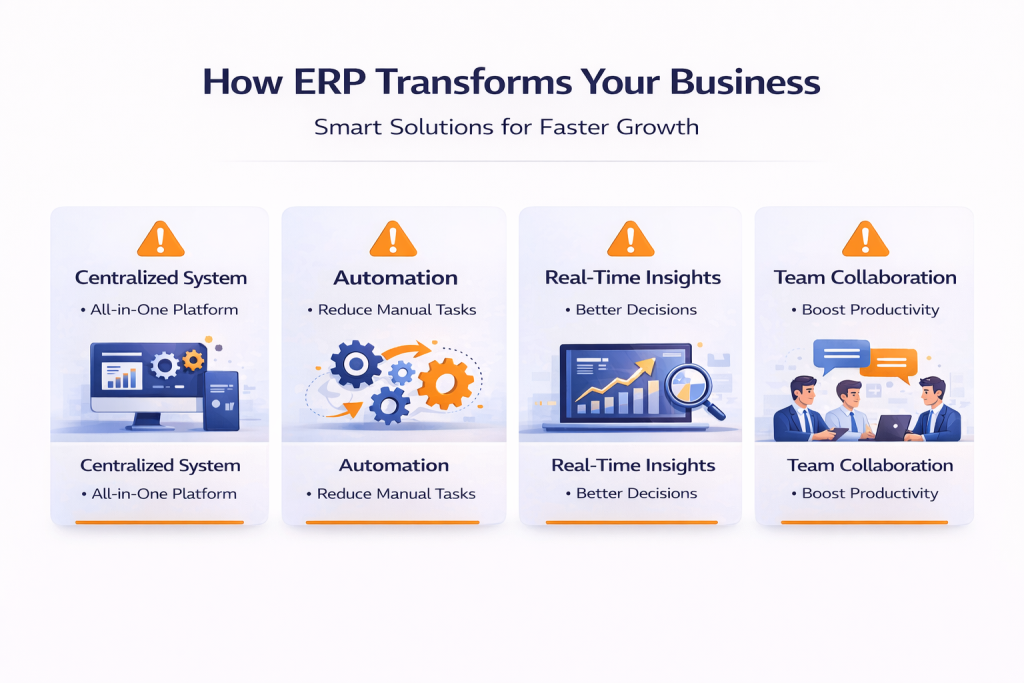
As businesses grow, managing operations becomes more complex. Teams handle larger workloads, departments generate more data, and manual systems often struggle to keep up. This is why ERP systems have become essential for growing businesses. ERP software helps organizations centralize operations, automate workflows, and improve decision-making through one connected platform. According to Panorama Consulting, 95% of businesses report improved business processes after ERP implementation. Without ERP, growing businesses often face delays, communication gaps, and data inconsistencies that slow performance. ERP gives companies better control over daily operations, improves visibility across departments, and supports long-term scalability. For businesses in Angola looking to expand efficiently, ERP provides the structure and automation needed to manage growth without increasing operational chaos.
👉 Ready to Simplify Your Business Operations with ERP?
If your business is struggling with manual processes, disconnected systems, or operational delays, Digital Data Tecnologia offers customized ERP solutions designed to streamline workflows, improve efficiency, and support business growth in Angola. Connect with our experts today to find the right ERP system for your business needs.
Helps Manage Business Operations in One Place
ERP systems bring all major business functions together into one centralized platform, making it easier to manage operations efficiently. Instead of switching between multiple tools, teams can access everything in one system.
ERP Helps Manage:
- Finance and accounting
- Inventory and stock levels
- HR and payroll management
- Sales and customer orders
- Reporting and performance tracking
According to Oracle, centralized ERP systems improve operational visibility and help businesses make faster decisions. For example, when a sale is recorded, the ERP can instantly update stock, notify finance, and generate reports automatically. This centralization improves efficiency and reduces confusion across departments.
Reduces Manual Errors and Repetitive Tasks
Manual processes often lead to mistakes, delays, and wasted time, especially as businesses grow. ERP systems automate repetitive tasks and reduce human error by streamlining workflows.
ERP Helps Reduce Errors By:
- Automating data entry and calculations
- Eliminating duplicate work
- Standardizing business processes
- Reducing paperwork and spreadsheets
According to Forbes, automation can improve workplace productivity by 20–30%. For example, instead of manually creating invoices every day, ERP systems can generate invoices automatically after a sale. This saves time, reduces administrative work, and improves overall accuracy. Businesses benefit from smoother operations and fewer costly mistakes.
Improves Team Productivity and Collaboration
ERP systems improve productivity by helping teams work faster and communicate better across departments. Since everyone accesses the same real-time data, collaboration becomes smoother and more efficient.
ERP Improves Team Productivity By:
- Giving teams shared access to updated information
- Reducing delays in communication
- Speeding up approvals and workflows
- Helping departments coordinate better
For example, if the sales team closes an order, the inventory and finance teams can instantly view the update through the ERP dashboard. According to Deloitte, businesses that use connected digital systems improve team efficiency and decision-making significantly. ERP removes communication barriers and helps teams work together more effectively, leading to stronger performance across the organization.
How to Choose the Right ERP System for Your Business
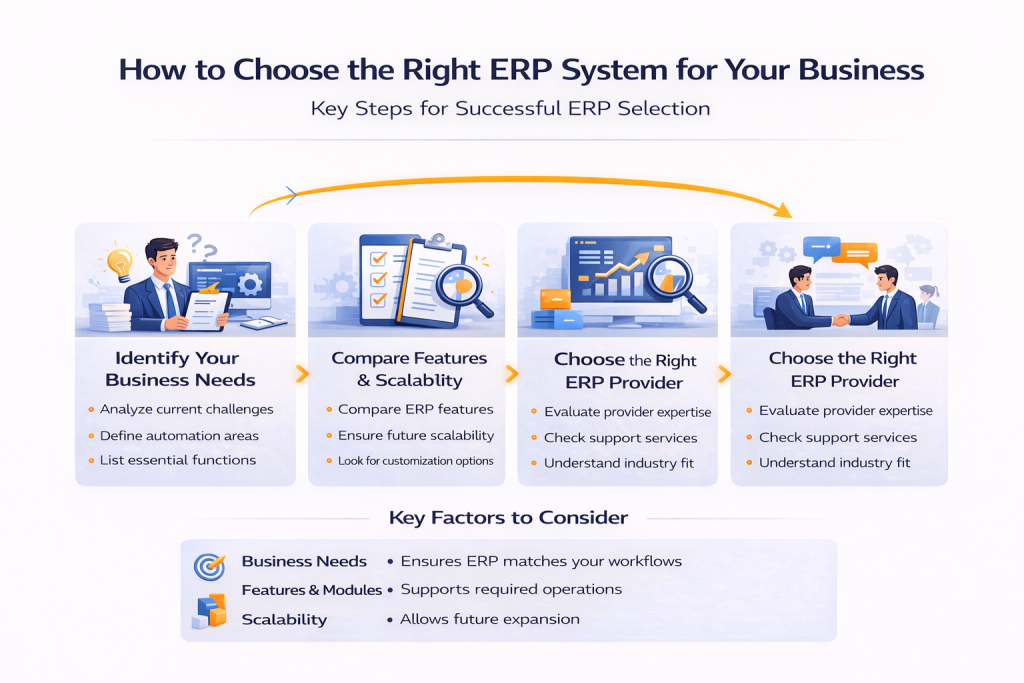
Choosing the right ERP system is a critical decision that directly affects your business efficiency, scalability, and long-term success. Not every ERP platform fits every business, so companies must evaluate their needs before making an investment. According to Software Path, nearly 50% of ERP implementation failures happen because businesses choose the wrong software or vendor. The best ERP system should align with your business goals, support your operations, and adapt as your company grows. Businesses in Angola should focus on selecting ERP solutions that solve current challenges while supporting future expansion. By understanding your business requirements, comparing system capabilities, and partnering with experienced providers, you can ensure a successful ERP investment.
Key Factors to Consider When Choosing ERP
| Selection Factor | Why It Matters |
| Business Needs | Ensures ERP matches your workflows |
| Features & Modules | Supports required operations |
| Scalability | Allows future expansion |
| Provider Expertise | Improves implementation success |
Taking time to evaluate these areas helps businesses choose a solution that delivers long-term value.
Identify Your Business Needs
Before selecting an ERP system, businesses must first understand their current challenges and operational requirements. Choosing software without identifying business needs often leads to wasted investment and poor adoption.
Questions to Identify Your Needs:
- Which processes need automation?
- What departments require ERP support?
- Where do delays or errors happen most?
- What reporting or insights do you need?
For example, a retail company may need stronger inventory tracking, while a service-based business may focus more on finance and project management. According to Panorama Consulting, businesses that define ERP goals before implementation experience higher project success rates. Understanding your priorities helps you choose the right ERP modules and features.
Compare ERP Features and Scalability
Not all ERP systems offer the same features, so comparing functionality is essential before making a decision. Businesses should choose a platform that meets current needs and supports future growth.
Key Features to Compare:
- Inventory and supply chain management
- Financial and accounting tools
- HR and payroll modules
- Reporting and analytics dashboards
- Integration with existing software
Scalability also matters because your ERP should grow as your business expands. For example, a company may start with accounting features today but need CRM or HR modules later. According to Gartner, scalable ERP systems reduce long-term upgrade costs and improve ROI. Selecting flexible software prevents future limitations and expensive replacements.
Work With an Experienced ERP Provider
Partnering with an experienced ERP provider increases implementation success and reduces technical risks. A knowledgeable provider understands how to configure the system based on your business needs and industry requirements.
Benefits of Working With Experts:
- Professional guidance during setup
- Faster implementation process
- Better customization and integration
- Ongoing support and maintenance
For example, an experienced ERP provider can recommend inventory-focused solutions for retail businesses or finance-heavy modules for accounting firms. According to McKinsey, businesses working with experienced technology consultants complete digital projects faster and with fewer disruptions. The right ERP partner ensures smooth implementation, proper training, and long-term system success.
Conclusion :
As businesses in Angola continue to expand, managing operations efficiently becomes more important than ever. An ERP system helps businesses centralize operations, automate repetitive tasks, reduce errors, and gain real-time insights for smarter decision-making. From finance and inventory to HR and reporting, ERP software creates a more organized and scalable business environment that supports long-term growth. Companies that invest in ERP solutions today position themselves to operate faster, improve productivity, and stay competitive in an increasingly digital market.
If your business is ready to improve efficiency and streamline operations, partnering with the right ERP provider is the next step. Digital Data Tecnologia offers customized ERP solutions designed to help businesses modernize processes, improve performance, and achieve sustainable growth. Contact our team today to discover the right ERP solution for your business.
FAQs
1. What is an ERP system?
An ERP system is software that helps businesses manage core operations such as finance, inventory, HR, sales, and reporting through one centralized platform.
2. Why do businesses in Angola need an ERP system?
Businesses in Angola need ERP systems to improve efficiency, automate workflows, reduce manual errors, and manage operations more effectively.
3. How does ERP software improve business efficiency?
ERP software automates repetitive tasks, centralizes data, improves workflow management, and provides real-time reporting for faster decision-making.
4. Is ERP suitable for small businesses?
Yes, ERP systems benefit both small and large businesses by helping them streamline operations and manage growth efficiently.
5. What departments can ERP software manage?
ERP can manage finance, HR, inventory, sales, procurement, customer orders, and reporting within one platform.
6. How much does ERP implementation cost?
ERP costs vary depending on the software, business size, customization needs, and implementation complexity.
7. How long does ERP implementation take?
ERP implementation timelines vary, but most projects take several weeks to a few months depending on business requirements.
8. What is the difference between ERP and CRM?
ERP manages internal business operations like finance and inventory, while CRM focuses on customer relationships, sales, and lead management.
9. Can ERP systems grow with my business?
Yes, modern ERP systems are scalable and can add more features or modules as your business expands.
10. Why choose Digital Data Tecnologia for ERP solutions?
Digital Data Tecnologia provides customized ERP solutions, expert implementation, and ongoing support to help businesses streamline operations and achieve long-term growth.
 English
  Português de Angola